name="description" content="Terroir-expressing natural wine minimum intervention">

Wednesday, 14 March 2012

Pruning Pruning Pruning

I've been pruning for 3 days in a row, and just about every weekend for around 2 months. When I close my eyes I can still see images of canes and vines!!!


Pile of canes

Unpruned vine

More canes

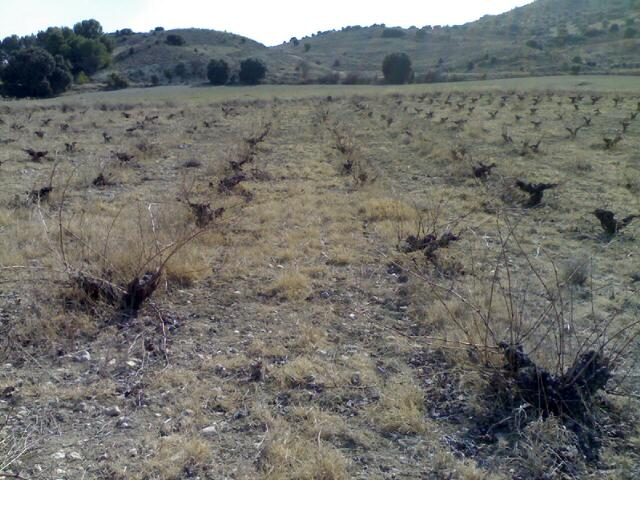
More unpruned vines

More piles of canes

The Carabaña (Madrid) vineyard, planted to both Airén and Tempranillo all mixed up, is almost finished - only about 100 vines to go. Then we'll start on the Villarejo vineyard, planted to Malvar, which has about 500 vines. Both these town are to the SE of Madrid and within the area covered by the D.O. Vinos de Madrid, though we're not regestered.

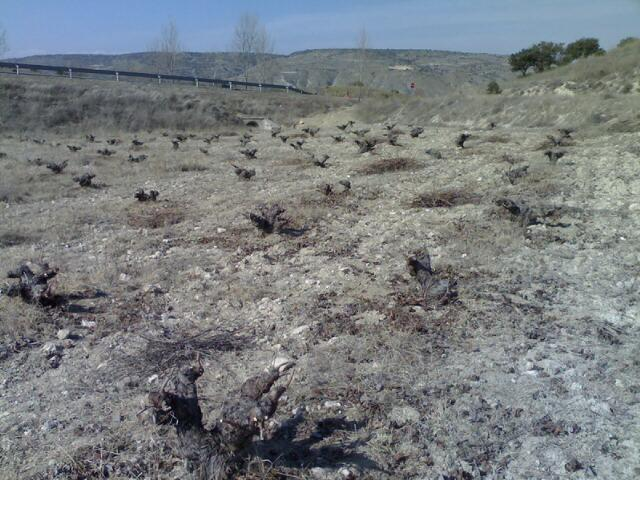
Unpruned vine in Villarejo

All our vines are low bush-type vines (fr: 'en gobelet'; sp: 'en vaso'), so it's quite hard on the old back muscles! The worst is at the beginning of the season, especially the first day, but after that it gets better.

Every morning, during the pruning season, I usually do some stretching and some sit-ups, which helps a lot and strengthens your muscles. The last three days were a bit much, though, so I'm going to give it a rest till the weekend.

Lots of unpruned vines

Pruned vines

More pruned vines

I think we're doing OK for time. The vines seem to be dormat still, as I haven't seen any "lloro" (crying!), ie a watery liquid that drips out of the pruning cuts. They should be waking up very soon now, as the max day temperature is easily about 25ºC here in central Spain. I've actually had to use sun-block and wear a hat! And drink 3 liters of water per day! It's still cold at night, but not below freezing any more.

After pruning each vine, we stack the canes in piles in the lanes between the rows of vines. In a month or so a tractor will come and chop them all up into tiny pieces. The tractor pulls a box-like implement behind it with revolving chins at ground level; the chains pulverize the canes and mow the grass and plants down to ground level. This is all good organic matter which improves the structure of the soil.

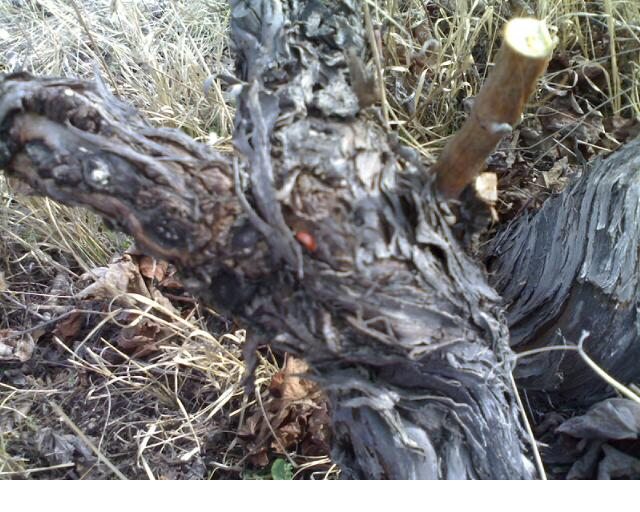
Spring is springing, slowly but surely. I've noticed more insect life lately in the vineyard. There are lots of ladybirds (ladybugs), and the other day I saw a lizard and a spider. Good predators! Yesterday a bee came by as I was having my lunch. As you can see from the photos, the ground is still quite bare, but the grass is starting to grow already. In about 2 weeks the ground will be visibly green.


Ladybird

I'm sorry if you found this post a bit boring, but that's all that's happening at the moment!
 
Here's a photo that's NOT of a vine or of a pile of canes :)
 
My lunch!
 
Here you can see my lunch in the back of the car! Bread, cheese, 'jamón', fruit. And in the background, my gloves, hat and pruning shears!

Tuesday, 6 March 2012

Airén 'Orange' Wine Pairing with Korean and Japanese Food


Well, this post totally breaks my New Year Resolution not to post or comment until at least 24 hrs have passed, but hey every rule has an exception!

So three of us went to this Korean/Japanese restaurant in Madrid, called "Los Palillos del Cardenal", which means 'The Cardenal's Chopsticks'. We reckon it's a good quality restaurant, because even though they have a reasonably priced set menu (€12), the place is always full of authentic Asian diners, as opposed to tourists or local office workers!

The Cardenal's Chopsticks

We ordered a glass of the house red (Rioja) so we could compare, and then I asked the waiter if we could have the bottle of my Airén 'Orange'. He was cool about it, but asked us to try not to let his boss see us!!! And he didn't charge us any corkage fee!

For the first course, two of us had tempura and one had hot spicy soup. The consensus was that beer (or soshu, or even water) would have been better with the soup and that any type of wine was wasted. More or less the same with the tempura, but with the Orange prefered to the red.

Airén 'Orange', sushi, spicy soup and kimchi

With the main courses (sushi, bimbimbar and chapchi) it was much better. With the sushi it was a hit! There was enough tannin and body to the Orange wine to stand up to the intense sushi flavours. We reckoned that a typical, standard, fruity type white wine wouldn't have worked. The red was too oaky and sweetish, and didn't really accompany well. The Orange also had a grapefruity, citrus-like bitter quality which worked very well.

I reckon that the flavour of orange wine is so unusual and different from a 'normal' red or white wine, that the surprise value is also significant.

With the Kimchi, I'm not sure. I think beer would have been better than any wine! It was a strong, intense and spicy Kimchi and I think it could overpower any wine! The worse is a red oaky wine.

Airén 'Orange' and kimchi
 
Well, some food for thought there!

Monday, 20 February 2012

Experiment Update: Pressing Grapes out of our Amphora / Tinaja / Qvevri


Background

Last Saturday we pressed the grapes from our clay amphora. This is an experimental lot of about 300 kg of grapes that we crushed and fermented back in September 2011. Ever since we moved ito the current winery in Morata de Tajuña a few years ago, I'd been noticing these two old clay amphorae sitting in a corner of the patio, gathering dust and leaves. So finally, last August, I made the effort, and I managed to convince Juan (my partner) and the other Juan (the owner of the winery and of the amphorae) to clean one and to use it to make wine.

So in Spetember, when we harvested the Malvar grapes from our new vineyard in Villarejo, we filled up the amphora with manually crushed grapes, sealed it, and basically left it alone (see this post). We didn't add any substances at all (no SO2) and we just punched down the cap every so often until the skins didn't float any more. Anyway, that's 5 months of skin contact.

During this time, the skins, pips, lees, etc all sank to the bottom and the top became liquid - a golden transparent liquid.. Every so often we would open up the 'lid' (a plastic sheet tied down tightly) and we would taste the wine to see how it was developing.

Operations

Phase 1, as is the case with any of our operations, was cleaning and setting up. In this case it was quite simple as all we needed was a basket press, a stainless steel tank and pneumatic lid, and some assorted bits and pieces.

Cleaning the press and tank

Phase 2 was scooping out the liquid part from the top of the amphora. We used buckets and poured it straight into a separate airtight container, not into the press. We want to keep this wine separate from the wine we press off the grapes, to see if they are different in any way. With hindsight, we realized that we could have moved this wine by gravity, just using a simple plastic hose or tube, but we didn't think that there would be so much of it. We expected only a few bottles worth, but we ended up with about 50 liters. A little lesson learned there for the future!

Juan scoops out wine

Pouring and filtering

Phase 3 was scooping out the grapey-winey semi-solid mush and puting it into the basket press. This we did with buckets until the level got too low for us to reach down into.

Juan and Juan scooping out grapes

Pouring into the press

Phase 4 was tipping the ampora over so we could continue to scoop out and fill the press. We had to be really careful as we didn't want to have an accident and break the amphora, so we secured it to the wall with a rope, after tipping it over to about 45º.

Amphora secured to wall

But it was no use! We still couldn't reach all the way down to the bottom, so we laid it down horizontally.

Horizontal

Mission accomplished! And with the added bonus that the quantity on the amphora was just right to fill the basket press, so we could press the lot in only one session. :)

Pressing is hard work!

Mushy grapes

Murky turbid wine. Note the ingenious filtering device!

Phase 5. The last phase is always cleaning the equipment used and tidying up. A great bore to be sure, but really necessary!

Hosing down

Cleaning out

Some thoughts and some tasting notes

We were all surprised at the quality of both the liquid wine at the top and of the soupy gunge at the bottom. There were absolutley no off-tastes or off-aromas. During the tastings over the last 5 months, the dominant tastes and aromas were those of clay and earth! And we weren't really too happy about that. But on Saturday, for the first time, we tasted the wine physically far away from the amphora (we went outside into the patio), and the clay and earth tastes and aromas were almost gone! They certainly weren't dominant. Instead we could taste 'normal wine' with notes of citrus, quite tannic and mineral and bitter, but with some sweetness there too. We think that this wine has got some way to go still, and that it will age well. In fact, we're thinking of looking for a used oak barrel, that was used for white wine, and ageing it in there for a while. In a week or so, depending on tastings, and ambient temperatures, and level of clarification, we'll rack off the big lees, let it settle down again, and see how it develops. Maybe we'll keet the two lots separate or maybe mix them back together again.

Nice clear golden wine from the top of the amphora

I wonder how they did it in the old days before stainless steel and when clay amphorae were common, especially the big fat ones that ccould hold thousands of liters. How on earth did the move the grapes/must/wine/pomace?

Surprise Visit

Mid-morning as we were pressing the grapes, we received a surprise visit from a group of people who are going to open a stall in the Municipal Market (in the Lavapiés District of Madrid), selling organic wine, not only in bottles but also loose, by the liter, in recyclable, reusable containers, in some arrangement with their customers. I think that's a great initiative, as these municipal markets are kind of languishing these days - I suppose due to competition from supermarkets, shopping malls and an aging population in the city centre.

They told me that the Ayuntamiento (City Council) has relaxed its Byzantine requirements for obtaining a license, but that even so it was still a Kafkaesque nightmare! They haven't actually got their license yet, but they've started sourcing their local organic wines already - hence their surprise visit. After us, they were off to see another organic wine producer Andrés Morate in Belmonte del Tajo. Anyway, I hope they like the samples we gave them and that they succeed in obtaining their license and that they order some wine from us :)

Wednesday, 8 February 2012

Leaked: the secret agenda of the Natural Wine Movement

(Note to readers: this post is meant to be funny! It's my attempt at humour! I'm not angry, upset or ranting or anything like that!)
(Note to self: must work on this humour thing a bit more)

Wow, awesome post, oh Blogger! I think you’ve managed to cover absolutely all of the points that have already been repeated ad nauseam by other bloggers, already, before, over and over again, many times. And with an original amusing anecdote on how un-natural it is to make wine included. Keep up the good work.

The semantics. Yes, all the humans with brains already know that there’s nothing natural about making wine. It’s just that we, in the Secret Inner Committee of Utmost Control of the Natural Wine Movement, thought that ‘natural’ would be a really cool and useful adjective to use, and so using our super-powers and remote mind-control techniques, we have forced thousands of wine-lovers and wine-writers everywhere to use the phrase ‘natural wine’ against their will. It’s such a laugh seeing all these people using the word ‘natural’ with a meaning that’s not even in the dictionary yet. Ho! Ho! Ho!

The marketing. We’re onto that too. Agents Retisson and Ilocsam, to name only two, have responded perfectly to our conspiratorial promptings and scripts, and we’re very pleased with the levels of stridency, disdain and outrageousness. Yup, we’re well on the way to compliance with our secret agenda. As to Denigration Marketing, I have to admit that we didn’t actually think that one up ourselves, but we can certainly use it now that it’s been brought to our attention. I’ll bring it up personally with The Secret Agenda Setter at the next meeting.

We’re also working on the winemakers themselves. It’s come to our attention that some winemakers are actually trying to make the best wine they can; and even more shockingly, some have even succeeded in this misguided endeavour. Rest assured that we have the means to secretly inoculate their wines with Brett, VA and super-charged oxygen. And for serious cases we have a special micro-biological swamp solution.

These wines will of course be priced accordingly. Just as we can force wine-writers and wine-lovers to use the word ‘natural’ against their wills (and with a totally misleading meaning too. Ho! Ho! Ho!) we can also force thousands and thousands of customers to seek out winebars and restaurants and to actually pay good money to consume the stuff.

We are also working on suppressing any sensible, interesting discussions about natural wines that could potentially benefit the wine world. Any talk about how natural wines may possibly express a ‘terroir’ better than conventional wines will be stamped out ruthlessly. Same applies to talk about how maybe excessive interventions in the winery may possibly mask or destroy the expression of a ‘terroir’; similarly, how the abuse of chemicals in the vineyard may possibly alter the quality of the grapes; No, we will ensure that the debate about the semantics of the word ‘natural’ will run and run and run. We will ensure that our agents regularly blurt out strident, disdainful, arrogant marketing sound-bites, and that wine-bloggers everywhere respond to them. We will use our mind-control techniques to make these wine-bloggers repeat themselves even more than they do now; we will come up with and implant in their brains, ever more clever and amusing analogies showing how un-natural it is to make wine.

It has also come to the attention of the Secret Inner Committee of Utmost Control that there are some natural winemakers who are using SO2. Not to worry, we can easily deal with that too. Firstly we will make them all grow beards, including the females, and implant irresistible urges to follow the phases of the moon, planets and stars, and to plant cow horns and stag bladders in their vineyards. They will then be so busy doing this that they’ll forget all about the SO2. Their wines will then correctly oxidize prematurely.

We are bit worried by the numbers and varieties of natural wines that have an excessively long shelf-life and that improve and evolve over time. We’re not sure what to do about this, but if the word gets out, then it could seriously compromise the belief that natural wines are delicate, vulnerable, unprotected, and deteriorate quickly if frowned at for too long.

Last but not least, we will be implanting the latest version of the following modules in the brains of all sommeliers, restaurant staff and wineshop attendants: Skorn 4.6; Pat-Ro-Nize 2.0; Pompuss 5.1;

Sunday, 22 January 2012

A nice happy trivial post

A strange thing happened to me on the way to the forum the other day.

I was having lunch with some friends in Madrid, and as it was such a lovely day we decided to chance it outside on a terrace. A typical Menú del Día (set menu) at €11 for which you get a 1st course, a 2nd course, dessert or coffee, plus bread and a bottle of table-wine and ‘Casera’ or ‘Gaseosa’ (a fizzy sweet lemonade-type drink to mix with the wine).

So we ordered the ‘vino y Casera’ and when it came, we tasted it first before mixing in the Casera. We always do that, as a sort of anti-tasting, and talk about the nuances of the disgustingness and undrinkability of these wines! Well, shock, horror, and will wonders never cease!!!! The wine they served us yesterday was actually drinkable, not at all unpleasant and even had some aromas and tastes of a decent wine. This was not due to transitory madness, phase of the moon, or irrational exuberance as they say; there were three of us and we all agreed on the wine’s drinkability. We suspected an error at the bottling or labeling line, but we finished the bottle without ever adding any Casera.

So after lunch I checked out the wine on the internet. More surprises. It turns out it’s made by a winery called Bodegas Virgen de las Viñas, from near the town of Tomelloso, in the middle of La Mancha. It’s a co-op of over 2,000 (that’s two thousand!) grape-growers, with a total of over 23,000 hectares (about 55,000 acres) under vines, and they produce over 150 Million liters of wine. They have a website in English, but it doesn’t seem to work: http://www.vinostomillar.com/

The wine itself was called “Viña Tomilla Tinto”, and is a blend of Tempranillo and Garnacha. It retails at €1,38/bottle plus shipping.

Spanish Table Wine - No 'casera' required in this case!

I was surprised that such a massive cooperative winery could produce such a nice drinkable wine. Co-ops that size usually churn out undrinkable wines that have to be mixed with ‘Casera’. This is true – it’s not just me being elitist!!! At any restaurant in Madrid where they serve a Menu del Día, you automatically get a bottle of fizzy Casera to mix with the wine.

I was also surprised that they had a website in English, even though it doesn’t work. The site in Spanish doesn’t work very well either!

The food at the restaurant was also really good – much better than the usual fare at such places. It’s called “El Ibérico” and it’s on the Glorieta de Ruiz Jiménez next to the taxi rank. Intersection of C/San Bernardo and C/Alberto Aguilera, behind the taxi rank. It doesn’t have a webpage and I couldn’t find any reviews of it in the usual sites!

So if you’re passing through Madrid, hungry and on a budget, … you know where to go!

Wednesday, 18 January 2012

Pruning, Pesticides ... and Natural Wine Dogmas

Vineyards

We've gotten off to a good start with the pruning this year. We started right after New Year and have finished the small upper plot of the Carabaña vineyard - about 250 vines (all white Airén variety). It took so long to do because apart from the actual pruning, we also hoed up the earth around each vine to remove the grass and plants and to aerate the soil a bit.

Panoramic view of the small top plot in Carabaña
We don't plough up the vineyard between the rows like all our neighbours do - instead we let all the grasses, plants, flowers and thistles grow, and we just cut them back once or twice a year when they get too high. We also leave the canes from the pruning and chop them up into little pieces; and all this organic matter returns to the soil, improving its structure and fertility.

Close-up of vine before pruning it
This way of doing things has its advantages and disadvantages. The main disadvantage, I think, is the competition for water and nutrients from the grasses and plants. But, on the other hand, grass and plants have relatively small short roots, while vines have very long deep ones, as well as surface roots, and they seem to manage fine; also the vines we have, Airén and Tempranillo, are well suited to the climate and don't need a lot of water.

Close-up of vine after pruning it
The main reason for leaving all the grasses and plants is to provide a habitat for insects that all predate on each other, so no one species ever becomes a problem and attacks the vines or grapes. We've never used any pesticides in all the years (9) that we've been cultivating the vineyard.

Fabio hoeing up the soil around the vines
Yet another reason for not ploughing is that there will never be any residues of pesticides on the grapes or in the wine. I understand, from reading reports and articles, that all conventional wines made from non-organic grapes have traces of pesticides in them. Some people say that these residues are insignificant and harmless, but I have my doubts. I think that, like in many other issues, once you have the actual real facts and hard data available to you, it still boils down to a question of belief!

Fog in the vineyard in the morning
In this case, the facts are:
- There are traces of pesticides in wine
- Experts tell us that the quantities are insignificant and safe for human consumption

BUT, here are a number of doubts (or 'beliefs' if you prefer) that are important enough for me not to use pesticides:

Lovely earthworm - sign of a healthy living soil :)
1. It's happened often enough in the past that a chemical or substance has been banned at a certain point in time, because it was discovered that it wasn't safe after all! I believe that the same could happen this year or next with any product that is currently permitted. I also believe that this is because the authorities pay more attention to corporate lobbies than they do to consumer/safety lobbies.

2. These products may well be safe for human consumption, but what about the runoffs that go into the soil, underground aquifers and rivers? I don't think they're safe for micro-organisms, flora and fauna, or for the environment in general. It's also a fact that the world's pollution problem is caused by industry and agriculture.

3. Even though each individual pesticide may be considered harmless and safe for human consumption, what about the 'cocktail effect' of many pesticides combined. There are no studies showing that they're safe in combination with each other.

Tools of the day - hoe (or is it an adze?), gloves and pruning shears
Anyway, 250 vines down, 1000 to go - in Carabaña. Then we have about 3000 vines in Villarejo (Malvar variety) to prune too. The deadline is around March when the vines wake up from their winter dormancy and the sap starts flowing. It's not a good idea to prune after that happens, because you'd be removing valuable nutrients from the vine. The same applies if you start pruning too early, ie before the vines go into dormancy around November/December.


Rabbit droppings - at least they left something nice behind
 after eating 20% of our grapes!

Bodega

Not much happening in the bodega these days. Just checking and tasting the wines to see that they're coming along OK. Basically, they just sitting there and the cold of winter which helps them to settle down. The most pressing task at the moment is to do some bottling. We have several wines in oak barrels that need to be bottled, otherwise the oak will dominate too much.

Crates of recycled de-labelled wine-bottles, ready for washing
The other day I soaked and delabelled about 100 bottles. Sinse the harvest back in September, we've managed to delabel about 1000 bottles; now we need to wash them and fill them.

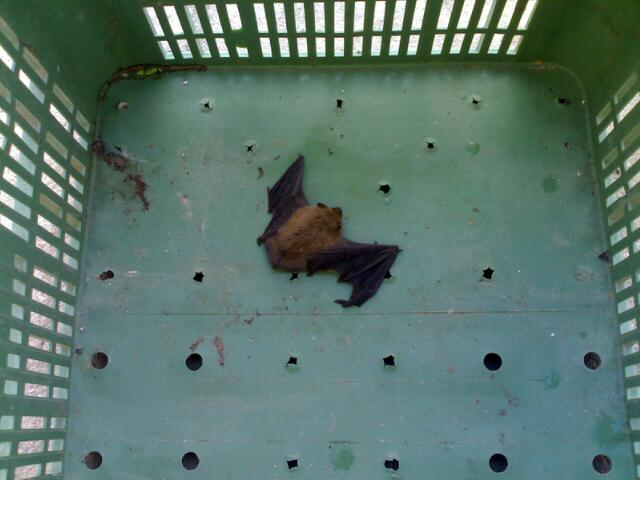
Poor bat
I found this poor bat lying at the bottom of an empty crate. No idea what could have happened. They usually fly around at night in the patio of the bodega, and inside the bodega itself too, snapping up insects. This is especially useful during fermentation when myriads of tiny fruit-flies appear.


Promotion/Social

Not much happening on this front either in general, though there have been two very interesting events recently. The first was our annual Vinos Ambiz tasting where we presented our new 2011 wines and a couple of older ones too (see this post). This year it was on 16th December and held at CSO Casablanca, an 'occupied' (ie squatted) social centre in Madrid. Unfortunately, I forgot to take photos until the very end, and no-one who was there has sent me any that I can use :(  That'll teach me!

The second event was a lunch last Sunday with some wine-people at Los Asturianos restaurant in Madrid. It started off being just a tasting of my new wines between me and my US importer, José Pastor, but as time went by (and Spain being Spain!), things escalated and complicated themselves and in the end there were 7 of us with over 40 wines to taste!!! We were: José Pastor (US natural wine importer), Victor de la Serna (Spanish journalist and winemaker), Alice Feiring (US natural wine writer), Alfredo Maestro (Spanish natural winemaker), Richard van Oorschot (Dutch wine aficcionado), Nacho Bueno (Spanish wine aficionado). And these were the wines:

- Niepoort-Navazos 2009 Palomino Fino (Non-DO)
- Equipo Navazos La Bota de Manzanilla Num.32 (DO Jérez y Manzanilla)
- Ximénez-Spínola Exceptional Harvest 2010 (Non-DO)

- Vinos Ambiz 2011 Airén (Non-DO)
- Lovamor 2011 Alfredo Maestro (VT Castilla)
- Vinos Ambiz Malvar 2011 Carbonic Maceration

- Albariño de Fefiñanes III Año 2007 (DO Rías Baixas)
- Reto 2010 Ponce (DO Manchuela)
- Níspero 2009 Eufrosina Pérez Rodríguez
- Picarana 2010 Marañones (DO Vinos de Madrid)

- Picos de Cabariezo 2010 (VT Liébana)
- Ganko 2009 Olivier Rivièr (DOC Rioja)
- Finca Sandoval Signo Garnacha 2009 (DO Manchuela)
- El Puño 2007 El Escocés Volante (DO Calatayud)
- Vinos Ambiz Garnacha 2010
- Vinos Ambiz Coupage 2010 (Tempranillo Graciano Sirah)

- Ultreia 2008 Raúl Pérez (DO Bierzo)
- Tilenus Pieros 2002 Bodegas estefanía (DO Bierzo)
- Finca Sandoval Signo Bobal 2008 (DO Manchuela)
- Ponce PF 2009 (DO Manchuela)
- Alfynal 2009 Bruno Prats (DO Alicante)

- Casa Castillo Pie Franco 2006 (DO Jumilla)
- Tres Patas 2007, Bodegas Canopy (DO Méntrida)
- Malpaso, Bodegas Canopy (DO Méntrida)
- Guimaro
- Jarrarte Maceración Carbónica (DOC Rioja)

Apart from the above wines (as if they weren't enough!) Alfredo brought these:

Lovamor 2011
Amanda 2011
Viña Almate 2011
Garnacha 2011
Garnacha 2010
Viña Almate 2010.
Viña Almate LA OLMERA 2009
Viña Almate LA GUINDALERA 2009
Tinto Castrillo de Duero 2009
Gran Fausto 2003

and José brought these:

<pending>

I have to say that it was too much for me. I loved all of them, but I didn't have enough time to savour them and talk about them. I was surrounded by experts who could do 2 wines in about 5 minutes (we tasted them in pairs). So I'm not going to post any tasing notes here, firstly because I didn't take any (!), secondly because I'm sure the other 'comensales' will post some comments, and they're all more experienced tasters than me. The only ones I managed to savour were a few unfinished bottles that I stuffed into my rucksack as we left the restaurant, which I thoroughly enjoyed over lunch and dinner at home on Monday and Tuesday :)

I was also looking forward to a nice chat about natural wines, but that didn't happen either :(   Too many people, too many wines, too many conversations going on at the same time. But hey, I'm not complaining - I really appreciated the chance to taste so many quality Spanish wines, at the same time, and surrounded by such knowledgeable people. Quite a lot of corners of Spain were represented at our table that day!

Sorry, I forgot to take photos!

Friday, 9 December 2011

Vinos Ambiz Annual Tasting

Confirmed!


Where:
CSO Casablanca (c/Santa Isabel, 21) (Metro Antón Martín)
Madrid (Spain)

When:
Saturday 10 December 2011, at 19:00 (-ish)

What:
We'll be presenting at least the following wines:

- Airén 2011 (young white), from Carabaña (Madrid)

- Garnacha 2010 (lightly oaked), from San Martín de Valdeiglesias (Madrid)

- And at least two other 'interesting' wines that we we'll bottle up at the last minute!
We'll probably follow the same procedure as last year (and the years before), ie as we taste, and assuming we can get people to shut up and listen for more than 3 minutes, we'll give short speeches on how we grow our grapes and make our wines (eg, organic viticulture, non-use of pesticides and noxious chemicals, no adulteration of the must/wine in the bodega, sustainability, recycling of bottles etc); and we'll be answering any questions that anyone wants to ask.

How:
You just need to turn up; we will provide the wine and the glasses. Entry is free. You can come with whatever attitude you like and you can bring your own cultural baggage in with you - you don't have to leave it at the door! Skeptics and sychophants equally welcome!

Un abrazo, and sláinte

Fabio and Juan


P.S. We're trying to collect photos of previous years' tastings to make a thematic album:

2010: Tabacalera
2009: La Dragona (Ecologistas)
2008: El Patio Maravillas (c/Acuerdo)
2007: CSO Seco
2006: Off-Limits
2005: CSO Seco (antiguo)

If you were at any of these tastings and have photos, please send us a copy!

Thursday, 10 November 2011

Pottering Around the Vineyard and Bodega

Vineyard

Last Wednesday 9th November I went out to check on the vineyard at Villarejo. This is our 'new' vineyard that we took on last year and which we harvested for the first time a few weeks ago (see this post). White Malvar variety, old vines, about 40-60 years old I think.


View (1) of Villarejo Vineyard
There wasn't much for me to actually do, so I just wandered around looking at the vines, and soil and plant cover.

View (2) of Villarejo Vineyard

The leaves haven't fallen off yet, which means that the vines haven't entered their dormant phase over the winter, and that the sap is still flowing.


View (3) of Villarejo Vineyard

I noticed that most of my neighbours have already pruned their vines:

Neighbour's Vineyard pruned Already

I think it's a really bad idea to prune vines before the leaves fall off, because you're removing sap and nutrients before the vine has had time to store them down in the roots and trunk. The vine needs to use these nutrients to produce its first leaves in spring, before the leaves are mature enough to do photosynthesis and produce energy for growth.

Neighbour's canes piled up at edge of his vineyard
Maybe it's not that critical, because a vine won't actually die if you prune it too early! But on the other hand, it won't be as healthy and vigorous as it could be if you gave it the benefit of using all available sap and nutrients; and maybe in the long run, if you prune too early every year, you could shorten its lifespan, as the losses are cumulative.

I think it's also a bad idea to remove the canes from the vineyard. In my opinion, it's better to chop them up as small as possible and scatter them among the vines. This is good organic matter that will help improve the structure of the soil.

More neigbour's canes - ready for removal
I can't think of any possible advantage to pruning so early, as far as vine and grape quality, and health and vigour are concerned. The only possible 'advantage' could be one of convenience, ie the grapegrower has other crops and other tasks to do, and wants get the pruning out of the way as soon as possible!

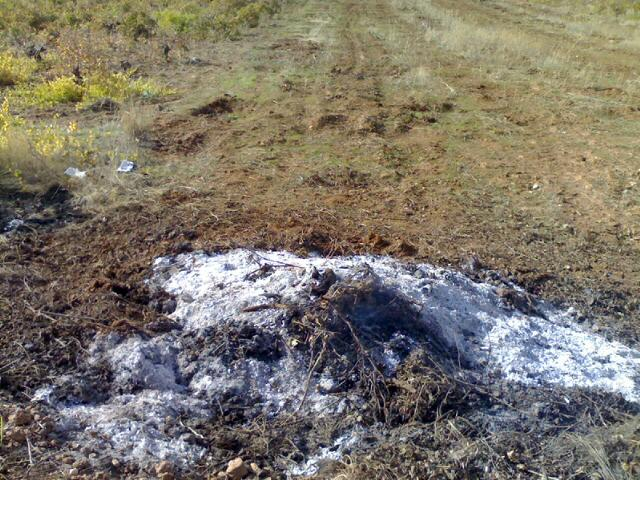
I was shocked and horrified, and angry and fustrated (all at once!) to see that our immediate neighbour had uprroted his vineyard and burnt the trunks. He must have done it the day before because the pile of ash was still smouldering.

Neighbour's ash smouldering

If only I had known before, I could have spoken to him and maybe reached an agreement to rent the vineyard from him. Personal reasons apart, I think it's a tragedy on a cultural, agricultural and social level to uproot/destroy old vines. They're part of everyone's heritage and history and culture.

Another neighbour, on the other side of the uprooted one, didn't bother to harvest his grapes this year!

Neighbour's unharvested grapes
I tasted a few, and surprisingly, they were still hale and healthy, and very sweet. While wandering around my own vines I came across a crate that we must have forgotten there during the harvesting, so I made use of it, and stole a few bunches of grapes from the neighbour! I'll confess if I ever meet him! In fact, I should really make an effort to find him, and speak to him about renting his vineyards, before he decides to uproot it too!

Bodega

Then I went to the bodega in Morata de Tajuña, to wash some bottles. We ask all our local customers to return our wine bottles to us. We then de-label them, wash and sterilze them, and reuse them.

I was supposed to do this task last weekend, but I had a cold and was feeling awful, and stayed in bed for 2 days instead!

In the end, I didn't do any bottle-washing as such - just soaking and de-labeling, in preparation for the actual washing tomorrow or the next day.

Bottle-soaking station
The stainless steel tank was full of water with an oak barrel immersed in it! It's an old barrel that we're rehydrating so we can use it in the future. Anyway, I used the water to fill the buckets for soaking the bottles, thereby 'saving' a few hundred litres of water.

Close-up of wine bottles getting their labels soaked off

The great majority of the labels come off relatively easily after only about one hour of soaking. A few though are just impossible, no matter how long you leave them soaking. Some labels are 'plastified' and so can't absorb any water, and some use super-strong adhesive.

Well, there are now about 500 de-labelled bottles ready for 'processing'. I hope to see you all at the bodega this Saturday and/or Sunday. Lunch and wine included! :)

Lastly, if you're following me on FaceBook and Twitter, you'll know that our clay amphora (in which we're making 200 litres of an experimental 'orange' wine) was leaking. Well, I think it's reached an equilibrium state, because it's not leaking worse, ie the damp marks on the walls of the amphora are just the same as last week; just damp, no actual liquid coming through.

More lastly, I tasted our Airén 2011 from Carabaña, and was very pleasantly surprised. I took a glass from the bottom of the tank, and it was crystal clear! Not cloudy at all. There was a whiff of an 'off' 'closed' smell (sorry, I don't know the technical term for it!) but it was volatile and disappeared almost immediately. I think this will disappear with a bit of airing at bottling, or a racking if necessary. The aromas and tastes were very intense, more than last year.

And finally lastly, some winery activities that you're all welcome to come along to:

Apart from bottle-washing:

- Bottling the Airén 2011

- Bottling the coupage (60% Tempranillo, 20% Graciano, 20% Sirah)

- Making orujo (grappa, marc, pomace brandy)

If anyone's interested, contact me either on my mobile (697-050-010) or by email enestoslugares@gmail.com for the details, ie date, time, where to meet, etc.
 
Creative Commons License
This work is licensed under a Creative Commons Attribution-Share Alike 3.0 Unported License.